
Your needs, this model
Does it fit your priorities?
Can Corvid 22 capture SDI at 1080p60 on Windows?
AJA’s exact rate table includes 1080p50/59.94/60, and the NTV2 SDK identifies two SDI inputs and Windows support. Confirm channel count, shared timing, SDK version and app behavior for the intended job.
Explore this need in the finder →Does it record 4K60?
No 4K mode is listed in the Corvid 22 table. The listed 2K modes stop at 25p, and 1080p60 is a separate HD timing. Consider a model whose own table documents UHD60 if that is essential.
Explore this need in the finder →Will both channels run at unrelated frame rates?
The older AJA OEM sheet qualifies dual independent channels: they must share frame rate, standard and image geometry. Check the exact source pair and SDK workflow; channel count alone does not guarantee every mixed-timing layout.
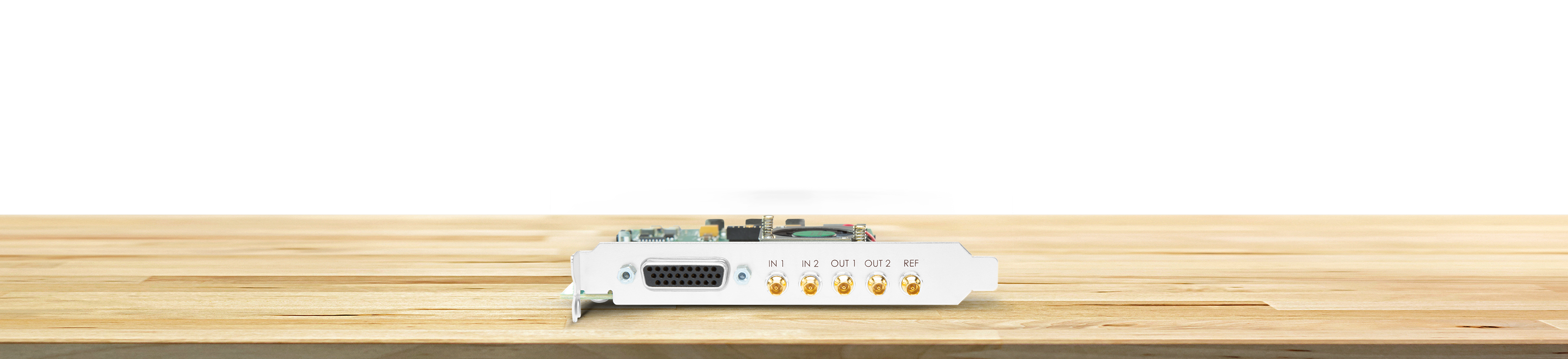
Explore this need in the finder →Corvid 22 is AJA’s earlier dual-channel SDI capture/playout card. Its main distinction from the nearby Corvid 1 and Corvid 3G models is not a larger resolution number but a two-channel connector layout: AJA lists two SDI inputs and two SDI outputs, plus reference and two RS-422 ports. The model is end-of-life; the SDK reference says it was superseded by Corvid 44. It belongs on a shortlist only when a compatible workstation and SDI workflow are already in view.
Two input channels and the limits of a mode label
The exact AJA sheet documents 3G-SDI and standard SD/HD timings, plus 2K 2048×1080 formats through 25p. The high-frame-rate HD list includes 1080p50/59.94/60. Corvid 22 has two audio I/O systems, each with up to 16 embedded channels, and independent channel/control resources. The NTV2 reference specifies the two-in/two-out hardware and 512 MB frame buffer. It also says that RGB is not supported on the SDI connectors; a hardware color-space converter can convert YCbCr SDI to/from RGB when using RGB frame-buffer formats. Treat these as separate parts of a professional signal path, not a consumer HDMI-to-monitor promise.
The evidence supports a 1080p60 SDI capture arrangement, but it does not establish that every application can sustain two simultaneous 1080p60 streams in every pixel format. AJA’s older OEM documentation warns that independent channels must share the same frame rate, video standard and image geometry. We therefore describe the two physical channels without turning them into an unqualified “two maximum-rate recordings” claim. If the project needs multi-channel ingest, check the actual SDK/API transfer path and host resources with AJA’s current support material before committing.
Connection hardware is part of the purchase
The board has four-lane Gen 1 PCIe and 1.0/2.3-style SDI connectors. AJA lists a 102953 breakout cable as optional for additional LTC and RS-422 access. Older order information differentiates Corvid 22 with no cable/bracket from a bracket configuration and lists pigtail adapters. Because package contents can vary by production and seller, inspect the exact board and included pieces instead of assuming a breakout lead is in the box. This matters both for mounting and for turning the board’s small coax connectors into a studio’s standard BNC patching.
AJA lists Windows and Linux in its historical SDK material and its current NTV2 device page notes Mac OS support from an earlier SDK release. That is useful compatibility evidence, not an assurance that modern OS releases or specific apps remain compatible. The product is developer-focused and AJA’s general support caveat makes third-party applications a separate check. This review does not assign OBS Studio, HDR recording, HDMI input or passthrough capability.
Where it fits beside other Corvid cards
Compared with Corvid 24, Corvid 22 has a fixed two-input/two-output SDI layout, while the 24 uses four connectors that software can assign as inputs or outputs and adds bypass relays. Corvid 24’s separate four-link 4K mode has a different operating tradeoff. Compared with the one-channel Corvid 3G, the 22 is more naturally suited to two independent feeds but lacks the 3G’s documented mixer/keyer module. Model names alone do not establish an interchangeable card or an equivalent app workflow.
Before considering a used board, check the end-of-life status, exact Corvid 22 identity, connector type, bracket and breakout/pigtail package, PCIe generation and lane allocation, supported OS/SDK, and the source’s SDI timing. For new systems, a current supported capture card may be safer than a legacy SDK dependency. No current stock, seller condition, warranty or price is inferred here.
Key specifications
Key details at a glance
| Signal input | 2 x 3G-SDI inputs and 2 x 3G-SDI outputs; reference input; optional 102953 breakout for LTC/RS-422 access |
|---|---|
| Confirmed capture formats | SD 525i59.94, 625i50; HD 720p50/59.94/60, 1080i50/59.94/60, 1080p through 60; 2K 2048x1080p/PsF through 25 |
| Confirmed passthrough formats | |
| Computer connection | 4-lane gen 1 pcie; din 1.0/2.3 sdi connectors. |
| Named compatible software | AJA NTV2 SDK/developer integration |
| HDR recording | No rate-specific hdr recording mode is documented; do not infer hdr from input, an hdbaset loop or hevc capability. |
Use the exact model’s instructions for operating limits, supplied equipment and version differences.
Sources for this review
Sources for this assessment

Check your complete signal path
Choose the source format, desired captured signal, passthrough target, computer connection and software together. A single device must support that whole arrangement.