
Your needs, this model
Does it fit your priorities?
Can the KONA 3G capture HDMI?
No. Its HDMI connector is output-only; SDI is the documented capture input. Choose a different card for direct HDMI ingest.
Explore this need in the finder →What is its documented Windows SDI/HD mode?
The conservative plan is one SDI source at 1080p60 on a Windows PCIe workstation. AJA identifies a PCIe Gen2 x4 board; 4K/UHD60 is not established for this model.
Explore this need in the finder →What changes between Quad and UFC firmware?
The channel directions differ. In UFC mode AJA assigns SDI 1 and 2 as inputs and SDI 3 and 4 as outputs; in Quad mode the SDI connections are configurable. Confirm firmware and application routing before connecting multiple sources.
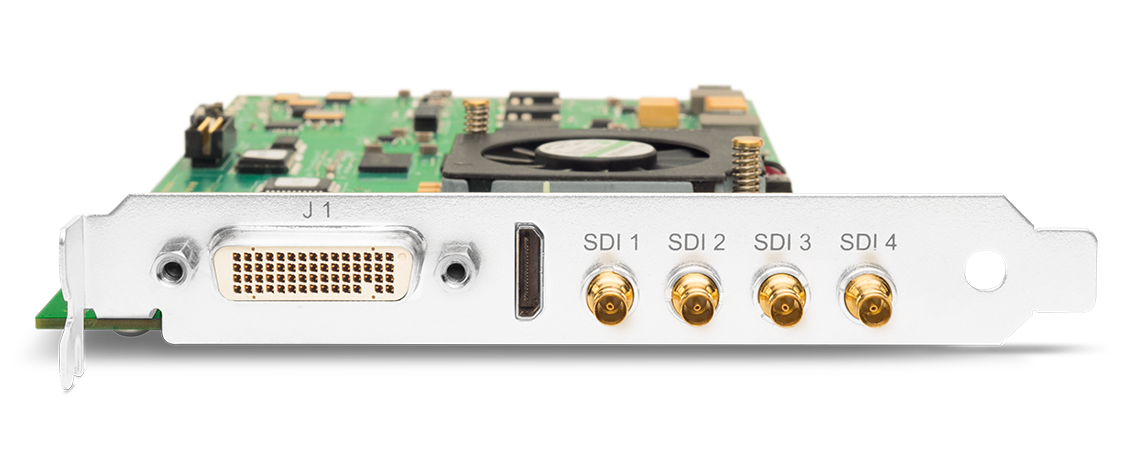
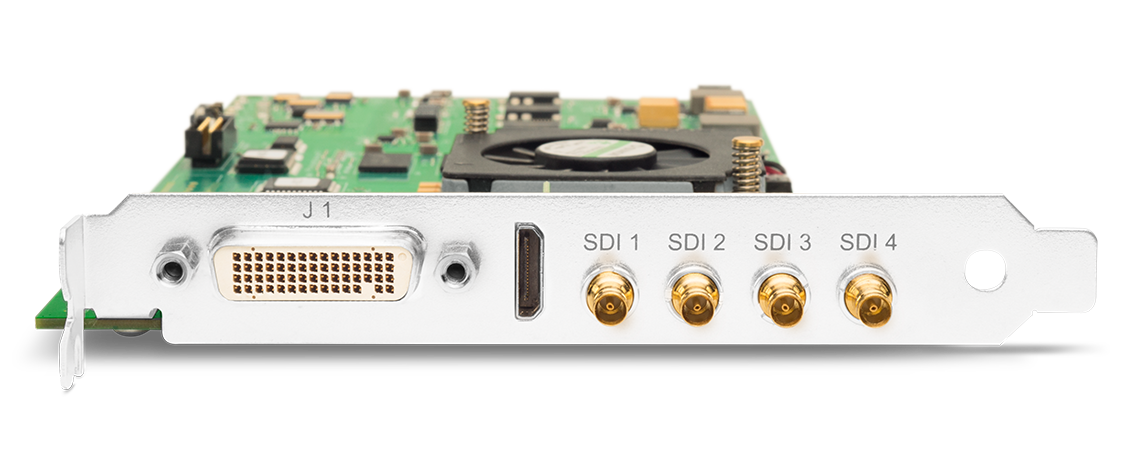
Explore this need in the finder →AJA KONA 3G is an earlier internal PCIe capture/playout board whose physical layout is reconfigured by firmware. In Quad mode, all four SDI BNC connectors are bidirectional under software control; in UFC mode, SDI 1 and 2 are inputs while SDI 3 and 4 are outputs. The HDMI connector is an output, not an HDMI source input. This single model assessment covers those two firmware arrangements without treating them as separate retail cards. AJA’s NTV2 reference dates the board’s end of life to November 27, 2018 and names KONA 4 as the replacement.
Know which version of the board you have
The public specification lists HD and 2K modes as well as 4K formats; its 4K scope is bounded. The technical page enumerates 4K and UltraHD up to 30p, while the NTV2 device record expressly says the board does not support UHD or 4Kp60 in the listed quad-mode context. The four SDI inputs can be linked and configured for a professional 4K path, but that does not turn the board into a 4K60 or HDMI capture device. The conservative finder assessment is one 1080p60 SDI input on PCIe, a mode the exact product table supports and that avoids overclaiming what a multi-link 4K arrangement requires.
Quad and UFC mode differ in more than a label. They use different device identifiers and channel direction: Quad exposes four configurable SDI connections; UFC has two inputs and two outputs. Both versions are part of the same KONA 3G hardware family, but firmware changes the I/O plan. Before installing or buying one, confirm the firmware state, connector direction, the required breakout cable or box, reference/LTC connections and whether the chosen application configures the selected mode. Optional breakout accessories are not assumed to be included.
Internal PCIe means a workstation workflow
The board uses a four-lane Gen 2 PCIe interface. It needs a compatible desktop or expansion chassis, an appropriate slot, sufficient host bandwidth and the right driver/app setup. It is not a laptop Thunderbolt device or a USB peripheral. The AJA SDK documents historical Mac and Windows support, but those old compatibility notes do not establish that current OS releases or third-party software remain qualified. AJA’s later software guidance for EOL products is particularly important before using a legacy card in a new workstation.
For capture, AJA’s own Control Room and device-control software are a more grounded starting point than assuming OBS will work. This card’s HDMI port is for output/monitoring; consumers looking for a direct HDMI source should compare a separate HDMI-input model. The board also has SDI output and analog component output, yet no universal display passthrough, HDR or VRR guarantee is implied by those ports.
A used-board checklist
Verify that the board is KONA 3G and not KONA 4 or a similarly named AJA card, and request photos that establish bracket, connector and card identity. Check for the correct optional cable/box, determine the installed Quad/UFC firmware, and confirm that SDI 1–4 are assigned as the project needs. Match the source’s exact raster, rate and link configuration to the technical table; check PCIe generation/lane requirements, available power, application support and reference timing.
The official page and SDK record establish identity, modes and end-of-life history, not present stock, seller condition, price, warranty or a completed compatibility test. This review is based on manufacturer documentation and does not claim hands-on use or measured performance. For a new system, the later KONA 4 or another current product may be a more sensible comparison, but those are separate models with their own evidence.
Primary references: AJA KONA 3G specifications and the AJA NTV2 quad/UFC device records.
Key specifications
Key details at a glance
| Signal input | Four 3G-SDI BNCs (bidirectional in Quad mode; SDI 1/2 inputs in UFC); HDMI is output only |
|---|---|
| Confirmed capture formats | SD/HD through 1080p60; 2K and 4K formats with multi-link limits; 4K/UltraHD not 4Kp60. |
| Confirmed passthrough formats | |
| Computer connection | Pcie gen 2 x4 internal card |
| Named compatible software | |
| HDR recording | No named hdr recording mode is assigned in the reviewed model-specific table. |
Use the exact model’s instructions for operating limits, supplied equipment and version differences.
Sources for this review
Sources for this assessment
Check your complete signal path
Choose the source format, desired captured signal, passthrough target, computer connection and software together. A single device must support that whole arrangement.